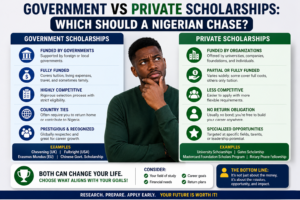
The average cost of a full university degree abroad is around $99,000 — roughly ₦148 million at today’s exchange rate — and for a Nigerian parent, that number can feel like a wall between your child and a foreign education. Worse, surveys show that while 73% of parents plan to fund their child’s overseas study, only 23% have an actual financial plan in place. That gap is where families go broke — draining life savings, selling property, or drowning in student loan debt to chase a degree they could have funded far more wisely. Studying abroad doesn’t have to bankrupt you; it has to be planned.
The good news: Nigerian parents who understand blended funding routinely send children to study in the USA, UK, or Canada without sacrificing their retirement or financial security. The secret isn’t being rich — it’s combining scholarships, smart country choices, savings, manageable loans, and your child’s own part-time earnings into one strategy. This guide is the practical blueprint for how Nigerian parents can fund a child’s education abroad without going broke — the six funding levers, the costs in dollars and naira, and the plan that protects your finances. Let’s fund the dream the smart way.
The Mistake That Bankrupts Families: No Plan
Start with the trap, because avoiding it is half the battle. As global education data confirms, the cost of an overseas degree — “tuition, textbooks and living expenses” — averages $99,000 (₦148m), yet “only 23% have an education or investment plan in place.” That mismatch between intention and preparation is exactly what drives families into financial ruin.
The families who go broke share a pattern: they treat the full ₦148-million cost as something to be paid from one source — usually savings hastily liquidated or a large loan taken in panic. The families who don’t go broke do the opposite: they spread the cost across multiple sources and start early. As funding experts advise, “combining both [savings and loans] allows you to minimize debt and preserve savings… it balances financial flexibility, reduces borrowing costs, and spreads the funding burden wisely.” So the first rule for a Nigerian parent is simple: never fund a foreign degree from a single source. Here are the six levers to combine.
Lever #1: Scholarships — Free Money First
The most powerful lever, and the one to pull hardest, is scholarships — because they’re “essentially free money and do not require repayment.” Every naira your child wins in scholarships is a naira you don’t pay or borrow.
Encourage your child to actively research merit-based and need-based scholarships from target universities, governments, and private foundations — and to “maintain a strong academic and extracurricular profile to be competitive.” For Nigerians, the targets are rich: need-blind US universities (which cover 100% of need), Chevening and Commonwealth (full UK funding), fully funded PhDs (tuition + stipend), the Mastercard Foundation, and dozens of partial awards. A strong student can offset ₦20–₦148 million through scholarships alone. The parent’s job here is to invest in your child’s profile early (grades, leadership) and push them to apply widely — every award won shrinks your bill. Scholarships first, always.
Lever #2: Choose An Affordable Country Or University
This single decision can cut your cost in half — and it’s entirely within your control. The difference between an expensive and an affordable destination is enormous:
| Destination | Annual Tuition | Naira (≈) |
|---|---|---|
| Germany (public universities) | €0–€3,000 | ₦0–₦5m |
| Cheap UK universities | £8,400–£15,000 | ₦16.8m–₦30m |
| Affordable Canada | CAD $15,000–$25,000 | ₦16.5m–₦27.5m |
| Expensive US private | $50,000–$70,000 | ₦75m–₦105m |
As education advisors note, “another way to reduce costs is by studying at cheap universities… many affordable options provide quality education without the high price tag.” Germany’s public universities charge little to no tuition even for internationals; the UK’s cheapest universities (Teesside, Bedfordshire) charge from £8,400 (₦16.8m); and a 1-year UK Master’s costs half a two-year degree elsewhere. Steering your child toward an affordable country or university — instead of a prestige-name school — can save ₦50 million or more with no loss of qualification value. Choose smart, not expensive.
Lever #3: Start Saving Early (And Strategically)
Time is a parent’s greatest financial ally. As funding guides stress, “if you can, start planning and saving early… long-term saving is an ideal way to fund an education.” Money saved over 10 years is vastly less painful than money scrambled in one.
The strategy for Nigerian parents: start a dedicated education fund early, contribute consistently, and — crucially — save or invest in a stable, harder currency where possible to hedge against naira depreciation (since the bill will be in dollars or pounds). Even modest monthly savings compound significantly over a decade. And the golden rule of safe saving: “savings can compromise your retirement or emergency funds” — so never drain your retirement or emergency money for tuition. Fund education from a dedicated pot, not your survival pot. Early, consistent, currency-smart saving is the backbone of funding without going broke.
Lever #4: Smart Loans To Fill The Gap (Not The Whole Bill)
When scholarships and savings don’t cover everything, loans fill the gap — not the whole cost. Used wisely, a loan “can help balance liquidity… and long-term financial security” and protects your retirement by spreading the burden.
The smart options for Nigerians:
- No-cosigner international lenders — MPOWER Financing ($2,001–$100,000, no collateral) and Prodigy Finance (up to $220,000 for top schools) lend based on your child’s future earning potential.
- NELFUND (Nigerian Education Loan Fund) — the government scheme offering flexible, income-based repayment with grace periods.
- The key discipline: borrow only the gap that scholarships and savings leave, and favour loans your child repays after graduating (from a foreign-currency salary), so the debt doesn’t crush the household. A loan is a tool to complete funding — never the first or only source.
Lever #5: Your Child’s Part-Time Earnings & Payment Plans
Two more levers ease the burden during study. First, your child’s part-time work — student visas in the USA, UK, and Canada allow 20–24 hours/week of paid work, earning ₦1.4–₦2.2 million a month that covers living costs (so you fund tuition, they fund their daily life). Canada’s co-op programs can earn even more.
Second, university payment plans — many institutions offer “interest-free payment plans” letting you pay tuition in monthly or termly instalments rather than one crushing upfront sum. This transforms a ₦30-million lump into manageable pieces and protects your cash flow. Combining your child’s earnings with instalment plans means you’re never hit with the full cost at once — a vital protection against going broke.
The Blended-Funding Blueprint
Here’s how a Nigerian parent puts it all together to fund a degree without financial ruin:
| Funding Lever | Covers | Priority |
|---|---|---|
| Scholarships | As much as possible (free) | 1st — pull hardest |
| Affordable country/university | Halves the total cost | 2nd — decide early |
| Early savings (dedicated fund) | Tuition core | 3rd — start now |
| Smart loans (gap only) | Remaining shortfall | 4th — fill the gap |
| Child’s part-time work | Living costs | 5th — daily expenses |
| Payment plans | Spreads tuition | 6th — ease cash flow |
The blueprint in one sentence: maximise scholarships, choose an affordable destination, save early into a dedicated fund, borrow only the gap, let your child earn living costs, and spread tuition via payment plans — never funding from a single source, and never touching your retirement. That’s how families fund foreign degrees and stay financially whole.
Frequently Asked Questions
How can Nigerian parents afford to send a child to study abroad? By blending funding sources rather than relying on one: maximise scholarships (free money), choose an affordable country or university (Germany, cheap UK schools), save early into a dedicated fund, use no-cosigner loans (MPOWER, NELFUND) only to fill the gap, let your child work part-time for living costs, and use university payment plans. This spreads the cost and protects your finances.
How much does it cost to educate a child abroad? A full degree averages about $99,000 (₦148m) including tuition, books, and living costs — but this varies hugely by destination. Germany’s public universities charge little to no tuition, cheap UK universities start at £8,400/year (₦16.8m), and affordable Canadian schools run CAD $15,000–$25,000 (₦16.5m–₦27.5m), versus $50,000–$70,000 (₦75m–₦105m) at expensive US private schools.
Should parents use savings or loans to fund study abroad? Both, blended. Savings avoid interest and debt but shouldn’t drain your retirement or emergency funds. Loans preserve your savings and spread the burden but add interest. Combining them — using savings for part and a no-cosigner loan for the gap — minimises debt while protecting your financial security. Never fund from a single source.
What’s the cheapest way to send a child abroad? Choose an affordable or tuition-free destination — Germany’s public universities charge little to no tuition, and the UK’s cheapest universities and 1-year Master’s degrees dramatically cut costs. Combine this with scholarships and your child’s part-time work, and the out-of-pocket cost can be a fraction of a prestige-name degree.
Can my child’s part-time work help fund their education? Yes, for living costs. Student visas in the USA, UK, and Canada allow 20–24 hours of work per week, earning roughly ₦1.4–₦2.2 million a month — enough to cover food, transport, and some rent. This lets parents focus on tuition while the child funds daily expenses, though part-time work can’t pay tuition itself.
Final Word: Plan The Cost, Don’t Be Crushed By It
Come back to that intimidating number — ₦148 million for a foreign degree — and the sobering fact that most parents plan to fund it but don’t prepare. That gap is where families go broke, draining retirement savings and selling assets in panic. But it doesn’t have to be your story. The Nigerian parents who fund their children’s education abroad without financial ruin aren’t richer than you — they’re simply smarter, refusing to pay the whole cost from one source and instead pulling six levers together.
So build the blueprint. Pull the scholarship lever hardest (free money first), choose an affordable country or university to halve the cost, start a dedicated education fund early (never your retirement pot), use a no-cosigner loan only to fill the gap, let your child’s part-time work cover living costs, and spread tuition via payment plans. Combine these, start early, and stay disciplined, and you can give your child a world-class education abroad — a degree, a career, and a future — while keeping your own finances whole. The dream is fundable. It just has to be planned, not panicked.
For verified guidance on funding study abroad affordably, scholarships, and protecting your finances, explore the resources at cmfanskills, and read our breakdown of whether a US degree is still worth it for Nigerians and part-time work rules and earnings while studying abroad — so you can fund your child’s future without going broke.